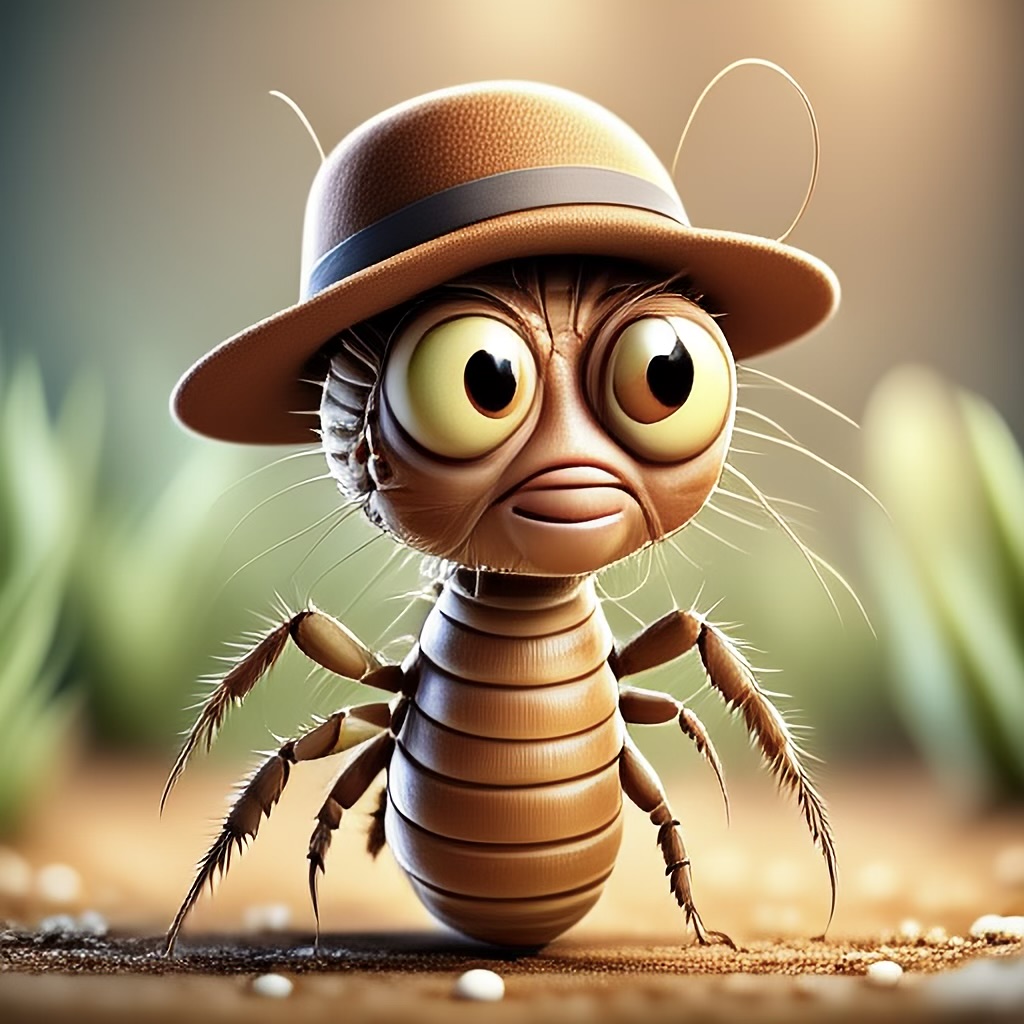
The ringing phone startles you out of your concentration. Dragging your eyes to your phone you see it's the school calling... 'uh oh' you think, as all the usual scenarios play out in your mind: someone threw up, there was an incident on the playground, someone is in the principal's office. Nope... this call is far worse. "Hi, this is the school nurse, I'm just calling to let you know that during a routine lice check, some nits were found in your child's hair."
Oh god.
"Honnney!!!!! Where's the flame thrower??"
As it turns out, there are some excellent herbal approaches to this common problem. So excellent that they outperform the over-the-counter lice shampoos on the market and are effective even against 'Super Lice' (which are lice that are resistant to the common chemical treatments). I have distilled lots of research down to my world famous Lice-inator Oil Concentrate that can be added to your usual hair routine. This, in combination with a little bit of cleaning as outlined below, will have your house back to its usual level of insanity in no time at all.
For the hair treatment, combine 1/2oz of the Lice-inator Oil Concentrate to 4 oz of your favorite hair product. If you do the no-poo or shampoo bar approach, then I recommend adding it to warm coconut oil (specifically coconut oil was proven to increase effectiveness) and apply with a root applicator such as this (affiliate link). The product needs to stay in your hair for at least 10 minutes for a nice full exposure.
While it's not necessary, I still recommend nit picking your hair at least once to provide a good healthy ground zero. While the Lice-inator treatment will kill both lice and nits, I like to get them out of my hair, dead or alive. I found these (affiliate link) nit combs to be handy for my family of both long and short haired folks.
Battle Plan:
Day 1
Days 5 and 10
For ongoing support, I'd do a preventative safety wash after close contact sports such as wrestling, gymnastics, and sleep overs.
Good luck! You got this.
Bibliography
Mumcuoglu et al. (2002) — Published in the Israel Medical Association Journal (PubMed: 12389342).
Burgess et al. (2010) — Published in the European Journal of Pediatrics (ISRCTN96469780).
Heukelbach J, Oliveira FA, Speare R. A new shampoo based on neem (Azadirachta indica) is highly effective against head lice in vitro. Parasitol Res. 2006 Sep;99(4):353-6. doi: 10.1007/s00436-006-0146-7. Epub 2006 Mar 28. PMID: 16568334.
Mehlhorn H, Abdel-Ghaffar F, Al-Rasheid KA, Schmidt J, Semmler M. Ovicidal effects of a neem seed extract preparation on eggs of body and head lice. Parasitol Res. 2011 Nov;109(5):1299-302. doi: 10.1007/s00436-011-2374-8. Epub 2011 Apr 12. PMID: 21484346.
Abdel-Ghaffar F, Al-Quraishy S, Al-Rasheid KA, Mehlhorn H. Efficacy of a single treatment of head lice with a neem seed extract: an in vivo and in vitro study on nits and motile stages. Parasitol Res. 2012 Jan;110(1):277-80. doi: 10.1007/s00436-011-2484-3. Epub 2011 Jun 11. PMID: 21667206.
Barker SC, Altman PM. An ex vivo, assessor blind, randomised, parallel group, comparative efficacy trial of the ovicidal activity of three pediculicides after a single application--melaleuca oil and lavender oil, eucalyptus oil and lemon tea tree oil, and a "suffocation" pediculicide. BMC Dermatology. 2011 Aug;11:14. DOI: 10.1186/1471-5945-11-14. PMID: 21864348; PMCID: PMC3182970.
Canyon DV, Speare R. A comparison of botanical and synthetic substances commonly used to prevent head lice (Pediculus humanus var. capitis) infestation. International Journal of Dermatology. 2007 Apr;46(4):422-426. DOI: 10.1111/j.1365-4632.2007.03132.x. PMID: 17442090.
Yang YC, Choi HY, Choi WS, Clark JM, Ahn YJ. Ovicidal and adulticidal activity of Eucalyptus globulus leaf oil terpenoids against Pediculus humanus capitis (Anoplura: Pediculidae). Journal of Agricultural and Food Chemistry. 2004 May;52(9):2507-2511. DOI: 10.1021/jf0354803. PMID: 15113148.